

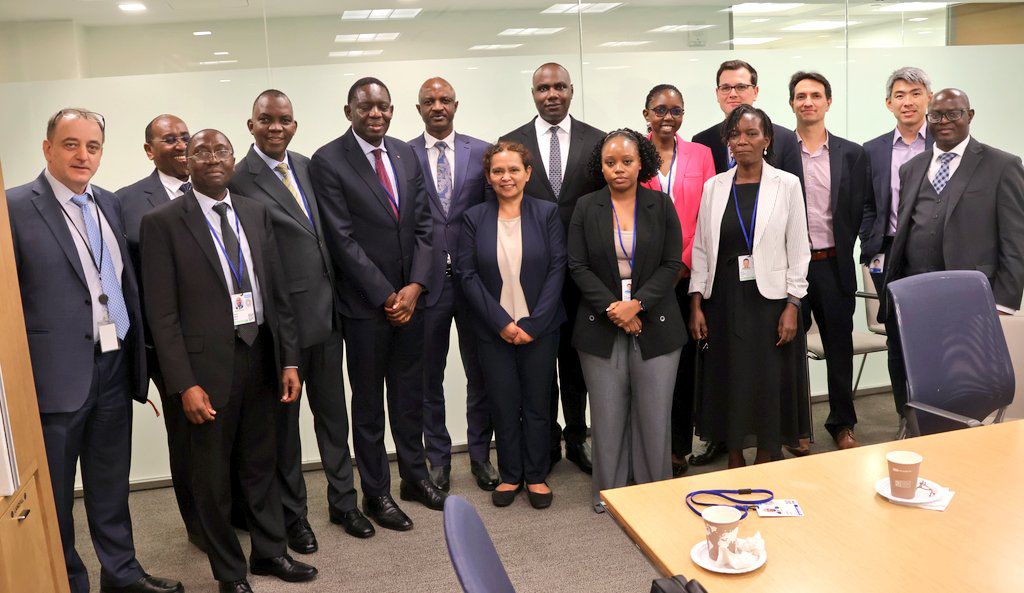
Government has intensified its engagement with global financial institutions, holding high-level discussions with both the World Bank and the International Monetary Fund (IMF) on key financing frameworks aimed at accelerating the country’s socio-economic transformation.
The meetings took place on the sidelines of the World Bank/IMF Spring Meetings 2026 in Washington, D.C., where Uganda’s delegation advanced negotiations on a proposed Development Policy Operation (DPO).
The DPO is expected to support the country’s ambitious Tenfold Growth Strategy, a cornerstone of Uganda’s long-term development agenda.
Development Policy Financing (DPF), a key instrument of the World Bank, provides budget support to governments undertaking critical policy and institutional reforms. These reforms are designed to stimulate inclusive economic growth, strengthen governance frameworks, and promote sustainable poverty reduction.
According to officials, the World Bank is set to dispatch a technical mission to Uganda in the coming days to further assess and refine the DPO framework. Priority areas under consideration include human capital development, strengthening fiscal sustainability, enhancing the policy environment for agro-industrialisation, and enabling infrastructure development to support private sector-led job creation.
In parallel engagements, the Ugandan delegation held consultations with the IMF’s African Department, led by Director Selassie Abebe Aemro, to review the country’s economic performance and progress under the Extended Credit Facility (ECF) programme.
The ECF, a concessional financing instrument under the IMF’s Poverty Reduction and Growth Trust, provides medium-term financial support to low-income countries undertaking macroeconomic reforms. An IMF mission is also expected to visit Kampala shortly to assess ongoing implementation of the programme and provide further guidance.
Uganda’s delegation, led by the Minister of State for Finance, Planning and Economic Development, Henry Musasizi, underscored the country’s commitment to maintaining macroeconomic stability while advancing structural reforms. Discussions with both institutions also addressed Uganda’s preparedness to respond to global economic shocks, including the evolving crisis in the Middle East.
Key areas of focus included strengthening tax policy and administration to enhance domestic revenue mobilisation, improving public debt management, and reinforcing fiscal resilience in a challenging global environment.
